
Bucket List / Experience Goals
Wing Walk
Still to do
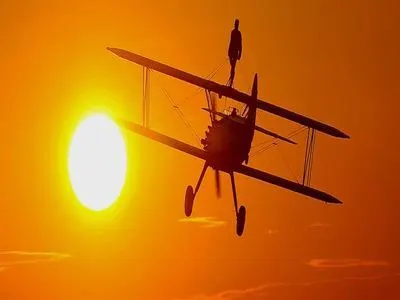
Stand strapped to the top wing of a vintage biplane as it banks through the sky at 100 mph.
The adventure
On the grass at a small airfield sits a Boeing Stearman, a 1940s biplane built to train military pilots, its radial engine coughing into life. You climb up onto the top wing, step into a rig and get strapped in standing up, with nothing in front of you but sky. The pilot taxis out, the engine roars, and the ground falls away beneath your feet.
Up there, the wind hits you at around 100 miles an hour, pressing your cheeks flat and stealing your breath. You spread your arms and lean into it as the biplane banks and dives, fields and hedgerows swinging past below. It's the closest thing to flying like a bird, a direct link to the barnstormers of the 1920s who walked between wings at air shows. When you land, windswept and grinning, you'll want to go straight back up again.
Why it’s epic
- Flying on top of a Boeing Stearman, a classic 1940s biplane.
- Wind speeds of around 100 mph as the aircraft swoops and banks.
- A link to the barnstorming wing walkers of the 1920s air show circuit.
- Many people fly for charity, raising sponsorship for their flight.
What it is
Wing walking means flying strapped to the top of a biplane.
How to do it
Book with a wing-walking company.
Top tip
Weight limits apply.
Need to know
- Operators set strict height and weight limits for safety, so check them before booking.
- Flights depend on good weather, so be prepared for postponements.
- Most experiences include a ground briefing and a flight of around 10 minutes.
Make it happen
Why it’s on my list
Have you ever wished you could fly? I definitely have!
One of the closest ways to feel like you can fly is wing walking, and so naturally its on my bucket list. Wing walking is the act of walking or moving on the wings of a flying aeroplane.
It started around 1920 at air shows. It actually began as a demonstration of planes’ balance and stability, moved to in-the-air mechanical adjustments and fixes and then to stunts. The early wing walkers became famous for their daring stunts. Wing walking became part of crucial air-to-air refuelling and plane-to-plane transfer. Nowadays it is done often for charity events, air shows and once-in-a-lifetime experiences – right up my street!
Comments