

Bucket List / Experience Goals
See The Northern Lights
Ticked off in February 2013
Stand in Arctic silence at minus 15°C as green curtains of light ripple across the whole sky.
The adventure
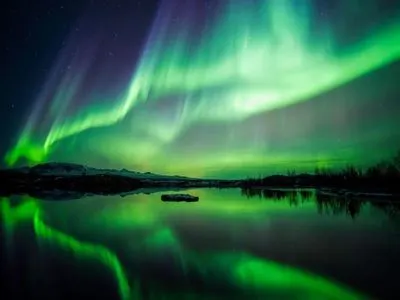
It usually starts as something you're not sure about: a pale, greyish smudge on the horizon that your camera shows as green before your eyes do. Then it brightens. A band arcs across the sky, thickens, and begins to move, folding and unfolding like a curtain in a draught. On a strong night it bursts overhead into a corona, rays streaming down from a single point, with flickers of pink and purple at the edges.
All of this is happening around 100 kilometres up, where particles from the sun crash into oxygen and nitrogen in the upper atmosphere. Down on the ground there is only snow, cold air in your lungs and the crunch of boots. People who have seen it often go quiet, and then can't stop talking about it for days.
Why it’s epic
- Green is the most common colour, from oxygen about 100 to 300 kilometres up; nitrogen adds purples and pinks.
- Tromsø, Abisko, Finnish Lapland and Iceland all sit near the auroral oval, where displays are most frequent.
- Sleep under the lights in a glass igloo in Finnish Lapland, or chase them by boat, husky sled or snowmobile.
- The sun's current 11-year cycle peaked around 2024 to 2025, so strong displays remain more likely for the next few years.
What it is
The aurora borealis lights up the night sky in green and purple.
How to do it
Stay several nights somewhere dark, such as Tromsø or Abisko.
Top tip
Watch the aurora forecast and cloud cover.
Need to know
- You need dark, clear skies, so go between September and March and avoid nights around the full moon if you can.
- Allow at least three or four nights, because cloud is the biggest reason people miss out.
- Check an aurora forecast app for the Kp index and cloud cover, and be ready to drive away from city lights.
- Dress for long waits in serious cold, with thermal layers, insulated boots and hand warmers.
Do it yourself
- Small-group adventuresMuch Better AdventuresActive small-group trips run by local experts.
- Tours and ticketsGetYourGuide
- HotelsBooking.com
- FlightsKiwi.com
Some of these are affiliate links: if you book through them I may earn a small commission, at no extra cost to you. More about this.
How I ticked it off
The Aurora Borealis (Northern Lights), one of the most magnificent natural phenomena, usually appears in the night sky between end of August and April. Like with many other natural phenomena, Northern Lights have appeared in a number of myths and tales. Some people say that Aurora Borealis is spirits moving across heaven. Or that they are reflections of the shields of the mythical female warrior Valkyrie.
Scientists know that Aurora Borealis is caused by solar winds hitting Earth’s upper atmosphere about 100 km high in the sky. The Earth’s magnetic field directs the flow of electrons from the sun to the magnetosphere above the magnetic North and South Pole. This is the reason that best places to see Auroras are above the Arctic Circles.
Northern Lights occur also in the summer, but the Midnight Sun and the light sky of the summer nights prevents us from seeing them.
Comments