
Visit Lake Baikal
Still to do
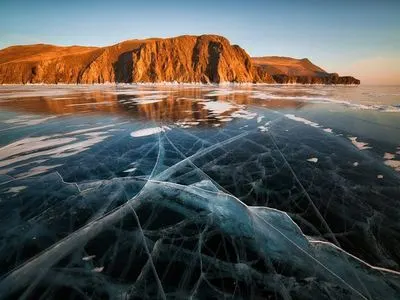
Walk across ice so clear you can see into the depths of the oldest, deepest lake on Earth.
The adventure
Lake Baikal is so big it behaves like an inland sea. It stretches more than 600 kilometres through Siberia, plunges to 1,642 metres and holds more water than all of North America's Great Lakes combined. At around 25 million years old it is the oldest lake on the planet, and most of the plants and animals in it live nowhere else, including the nerpa, a small, round-eyed freshwater seal.
In February and March the lake freezes so hard that cars and minibuses drive across it. The ice is often clear as glass, cracked into turquoise slabs and threaded with frozen bubbles, and it booms and pings beneath your feet as it shifts. In summer, the scene changes completely: wildflowers on the hills of Olkhon Island, the sacred Shaman Rock rising from the water, and swims that are icy even in July.
Why it’s epic
- At 1,642 metres, Baikal is the deepest lake in the world.
- It holds more water than all of North America's Great Lakes combined.
- Around 25 million years old, it is thought to be the oldest lake on Earth.
- Home to the nerpa, one of the world's very few freshwater seals, found nowhere else.
What it is
Lake Baikal is the deepest and oldest lake in the world and holds around a fifth of the world's unfrozen fresh water.
How to do it
Travel to Irkutsk, often on the Trans-Siberian Railway, then head to Listvyanka or Olkhon Island.
Top tip
Check UK Foreign Office advice on travel to Russia before planning a trip.
Need to know
- The UK Foreign Office currently advises against all travel to Russia, and most travel insurance will not cover you while that advice stands.
- UK citizens need a Russian visa arranged well in advance.
- Ice season is roughly February to March; only cross the ice with experienced local drivers and guides.
Why it’s on my list
Not done yet. If you’ve done it and have tips, tell me about it.
Comments