
Bucket List / Experience Goals
Go Into Space
Still to do
Unbuckle, float above your seat and look down at the thin blue line of Earth's atmosphere against the black of space.
The adventure
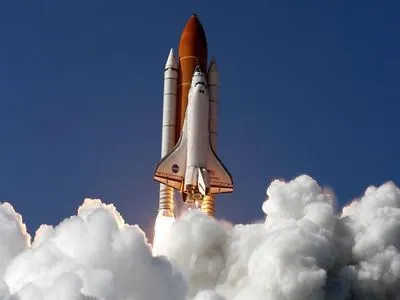
The engines light and the acceleration pins you into your seat, harder than any rollercoaster, as the sky outside the window fades from blue to indigo to black. Within minutes you've passed the Kármán line, 100 kilometres up, the internationally recognised edge of space. Then the engines cut out, the noise stops, and everything loose in the cabin starts to drift.
On a suborbital flight you get a few minutes of weightlessness: time to unstrap, turn a slow somersault and press your face to the window. Below you the curve of the planet is unmistakable, wrapped in a glowing film of atmosphere so thin it looks fragile. Astronauts call the feeling the overview effect, a sudden sense of how small and precious Earth is. Then it's back into your seat for the fall home, a gentle landing, and a story only a few hundred people alive can tell.
Why it’s epic
- Crossing the Kármán line at 100 kilometres, the boundary used by most of the world to define space.
- Several minutes of true weightlessness on a suborbital flight, or days of it in orbit.
- The curvature of the Earth and the black sky of space, seen with your own eyes.
- Private orbital missions on SpaceX's Crew Dragon have already flown civilians, including trips to the International Space Station.
What it is
Going into space is now possible for private citizens.
How to do it
Suborbital flights are offered by commercial companies.
Top tip
Expect very high prices.
Need to know
- Suborbital flights have been offered by Blue Origin and Virgin Galactic, but schedules and seat sales change often, so check each company's current status.
- You'll need to pass medical checks and complete several days of training before flying.
- Orbital trips involve months of training and cost vastly more than suborbital hops.
- Waiting lists can be long, and deposits are usually large and sometimes non-refundable.
Why it’s on my list
Exploring space for the mere mortal is rapidly becoming a possibility – as long as you have deep pockets. A number of companies are offering to take tourists on a trip to space.
While the fares are suitably astronomical, no scientific qualifications are needed, although you may have to undergo fitness tests and training ahead of your flight so it will not be your typical holiday!
A few different companies are pioneering space tourism.
Richard Branson – Founder of the Virgin Empire and the Virgin Galactic Program.
Elon Musk – Co founder of the Tesla Car Company created the Space-X Program
Jeff Bezos – Amazon founder has created Blue Origin Program.
Hopefully all this competition will bring the prices down and in my lifetime going to space will be a very real possibility.
Comments