
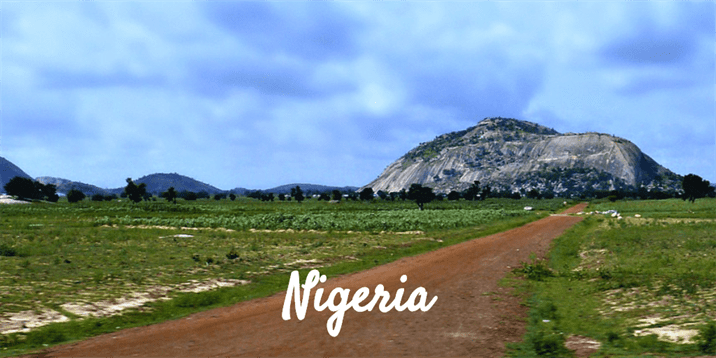
 Nigeria
Not been yet
At a glance
- Region
- Western Africa
- Capital
- Abuja
- Population
- 232.7 million (2024)
- Area
- 923,768 km²
- Languages
- English
- Currency
- Nigerian naira (NGN)
- Drives on the
- right
- Calling code
- +234
Visited Still to go Click a pin or country to read more. Zoom with + and −, a double-click or a pinch.
Before you go
Overview
Nigeria is located along the south-east coast of western Africa. The capital city is Lagos. It is the smallest state in the country with beautiful beach resorts. It is home to National Museum Lagos where cultural artefacts and craftworks are preserved. NECOM House is a skyscraper also located there where NITEL headquarters are and also the communications steeple at the top are used as a beacon for Lagos Harbor.
The country is famous for its Nollywood film industry. it is also among the world’s oil producers being the largest oil producer in in Africa. The country’s economy benefits largely from Petroleum production
Slave trade was rampant in The country between the 16th and 18th centuries, where they were sent to work on Americans plantations. British settled in Nigeria in the 1850s and made it their colony and protectorate. The League of Nations instructed a part of Kamerun to be part of Nigeria in 1922. Nigeria received their independence in 1960 with Prime Minister Sir Abubakar Tafawa Balewa leading the federation government until he died in 1966. Three eastern states pulled out of Nigeria with the state of Biafra starting a civil war with the Nigerian government from 6th July 1967 to 15th January 1970. General Muhammadu Buhari grabbed power in 1983 in a coup but later won a presidential election in 2015.

As of 2020, the country had a population of 200 million. It has an area of 923,768km2.
The official language is English.
The education system comprises of one year of pre-primary education, six years of primary school, three years of junior secondary, three years of senior secondary and four years of tertiary education.
The major religions are Christianity and Islam.
The country has a tropical climate, different regions receiving varying rainy and dry seasons. Major crops planted are beans, rice, sesame, cassava, groundnuts and palm kernel.
It is bordered by Niger to the North, Chad and Cameroon to the east, Gulf of Guinea of the Atlantic Ocean to the south and Benin to the west.
History
Kingdoms such as Benin, Oyo and the Sokoto Caliphate ruled the area before British colonisation. Nigeria became independent in 1960, and a civil war followed from 1967 to 1970.
Food & culture
Jollof rice, pounded yam with egusi soup, suya (spiced grilled meat) and puff-puff are favourites.
Wildlife
Yankari Game Reserve has elephants, and the Cross River area is home to the rare Cross River gorilla.
Festivals & events
The Argungu Fishing Festival, the Osun-Osogbo Festival and the Calabar Carnival are among the biggest.
Things to see
The Osun-Osogbo Sacred Grove, Lagos, Zuma Rock, Olumo Rock and the Obudu plateau.
Interesting facts
Nigeria is Africa's most populous country, and its film industry, Nollywood, is one of the largest in the world.
Neighbours
My Bucket List goals in Nigeria
None on the list yet. Got a suggestion? Email Dan.